An Atmosphere of Addiction
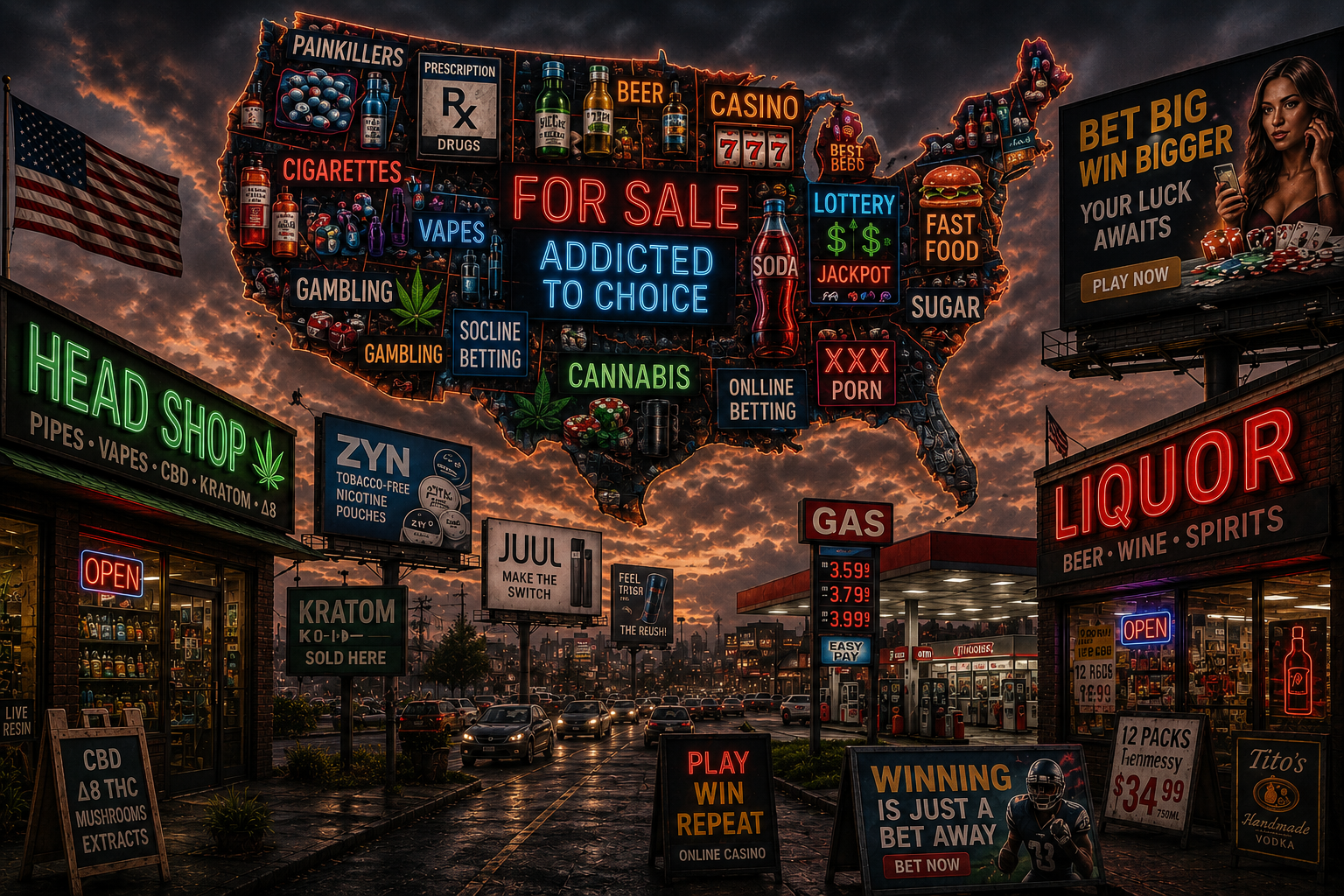
An Atmosphere of Addiction
We tend to think about addiction as something that happens to a small group of people with severe problems.
But what if addiction is not an exception to our culture?
What if it’s woven directly into the environment we live inside every day?
Modern trauma research has radically changed how we understand human development. We now know that children are not simply “thinking beings” learning information. Long before they have language, children are absorbing emotional environments through the body.
A developing nervous system learns safety, danger, connection, shame, regulation, and dysregulation implicitly.
And for much of modern history, people simply did not fully understand this.
Many parents genuinely loved their children while unknowingly passing down nervous system dysregulation rooted in their own attachment injuries, emotional neglect, chronic stress, unresolved trauma, or survival-based coping strategies. Entire generations were raised without a framework for developmental trauma, attachment science, or nervous system regulation. As evidence of how pervasive this experience is in our culture, about 40% of adults have insecure attachment styles.
The result is not that people are “broken.”
The result is that millions of people are walking around with nervous systems organized around survival rather than safety.
And then we placed those nervous systems inside a hyperstimulating capitalist culture built on comparison, productivity, individualism, achievement, urgency, and chronic insecurity.
That combination matters.
Because a dysregulated nervous system naturally searches for relief.
Not philosophically.
Biologically.
Anything that changes state can become regulating:
food,
shopping,
achievement,
social media,
pornography,
alcohol,
work,
cannabis,
opioids,
dating,
dopamine scrolling,
validation,
busyness,
even self-improvement.
The behavior is often less important than the function.
The function is regulation.
This is where modern culture becomes difficult to ignore.
Entire industries are built around offering short-term nervous system regulation:
fast food,
sugar,
streaming,
advertising,
online shopping,
vaping,
casual gambling mechanics in apps,
algorithmic social media,
constant stimulation,
status signaling,
luxury branding,
productivity culture,
and endless digital distraction.
And because relief is profitable, modern advertising rarely speaks to people’s deepest strengths.
It speaks to inadequacy.
You are not attractive enough.
Not productive enough.
Not successful enough.
Not optimized enough.
Not safe enough.
Not lovable enough.
Then a product appears offering regulation, belonging, identity, relief, stimulation, escape, or status.
The nervous system learns:
distress → consumption → temporary relief.
Over and over and over.
At some point, we normalized this process so completely that we stopped seeing it.
Driving down the road in America means passing hundreds of nervous system regulation opportunities every hour.
Most of them are socially sanctioned.
Many are heavily marketed.
Some are celebrated.
This does not mean pleasure is bad.
It does not mean capitalism is evil.
It does not mean every comfort behavior is addiction.
It means we are finally beginning to recognize how profoundly human behavior is shaped by nervous systems trying to survive environments they were never properly taught to regulate within.
And once you see that, it becomes difficult to unsee.
You start noticing how many behaviors in modern life are attempts to self-regulate chronic activation, emptiness, loneliness, shame, collapse, or disconnection.
You begin to see addiction not simply as a moral failure or a pathology in isolated individuals, but as a predictable adaptation emerging from the interaction between developmental trauma and an environment that profits from dysregulation.
Maybe one of the most important cultural shifts happening right now is this:
Younger generations are beginning to understand that emotional safety, attunement, regulation, attachment, rest, connection, and nervous system health are not luxuries.
They are developmental needs.
And if we continue building cultures that chronically dysregulate people while selling them endless forms of temporary relief, addiction will not remain an exception.
It will remain the atmosphere.